
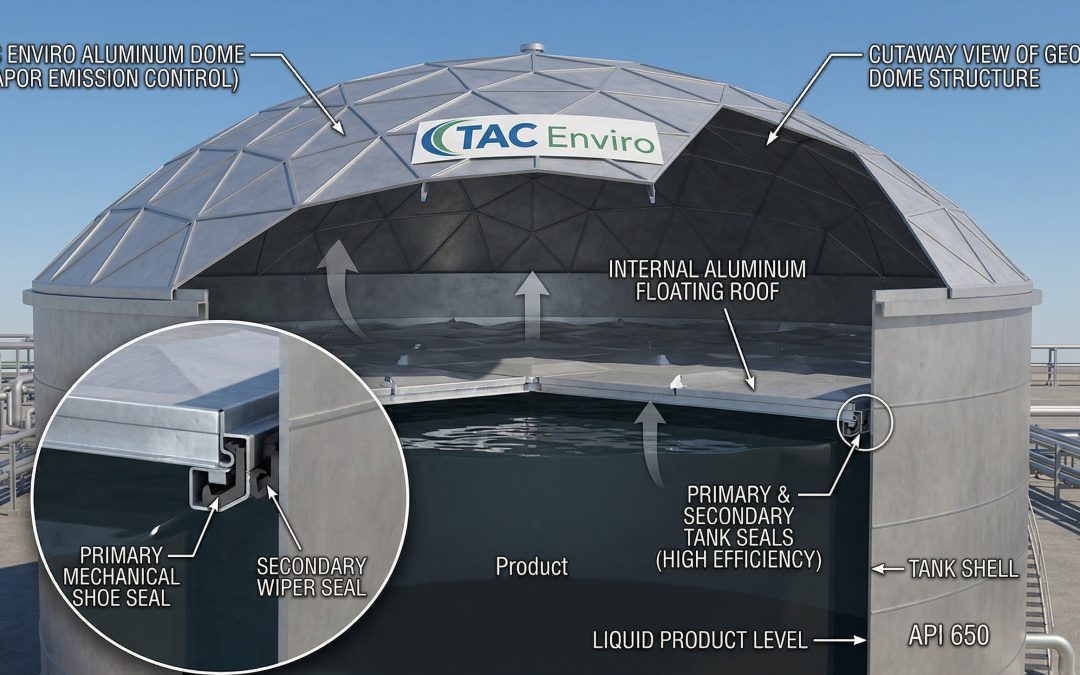
The integrity of bulk liquid storage is a cornerstone of industrial safety, environmental compliance, and economic efficiency. In the global energy and chemical landscape, the containment of volatile organic compounds (VOCs) and the prevention of product contamination are paramount. Central to this mission is the selection and maintenance of high-performance tank seals. These components, though often unseen, serve as the primary barrier between stored resources and the external atmosphere, ensuring that storage ecosystems remain stable and secure.
The Role of Tank Seals in Atmospheric Protection
Storage tanks, particularly those designed with floating roofs, rely heavily on the efficacy of their sealing systems. A floating roof is designed to rise and fall with the liquid level, minimizing the «vapor space» where gases can accumulate. However, without a robust seal between the roof’s edge and the tank shell, the system becomes vulnerable to evaporative losses and rainwater ingress.
Choosing the right tank seals involves understanding the chemical compatibility of the stored product and the mechanical stresses of the tank’s environment. Modern sealing technology focuses on multi-tiered protection, often utilizing primary and secondary seals to create a redundant safety layer. These systems are engineered to accommodate shell irregularities, such as «out-of-roundness,» which can occur over decades of operational use.
Engineering Advantages of Aluminum Floating Roofs
While the seals provide the boundary, the structure of the roof itself determines the overall stability of the storage environment. Aluminum floating roofs have become an industry standard for several technical reasons. Unlike traditional steel options, aluminum provides an exceptional strength-to-weight ratio, which reduces the load on the tank’s structural supports and allows for easier movement during filling and emptying cycles.
The corrosion resistance of aluminum is a significant factor in long-term asset management. In environments where humidity or acidic rain is a concern, aluminum floating roofs maintain their structural integrity far longer than carbon steel counterparts without the need for expensive coatings. Furthermore, their modular design often allows for rapid installation inside existing tanks, minimizing downtime for facilities operated by firms like TAC Enviro.
Technical Analysis of Vapor Control Systems
The transition toward more sustainable industrial practices has put a spotlight on vapor recovery and emission reduction. The primary goal of a storage facility is to keep the product in the liquid phase and prevent it from escaping as a gas. This is not only an environmental mandate but a direct preservation of profit margins, as lost vapors represent lost sellable products.
Integration of Primary and Secondary Seals
A single seal is rarely sufficient for modern regulatory standards. Industrial tanks typically employ a dual-seal strategy:
-
Primary Seals: These are located closest to the liquid surface. They can be mechanical shoe seals, which use metal plates held against the tank wall, or resilient foam-filled seals. Their job is to block the bulk of the vapors.
-
Secondary Seals: Mounted above the primary seal, these act as a final «wiper» or barrier. They provide additional protection against wind-induced vapor loss and serve as a secondary line of defense if the primary seal is compromised.
The synergy between these components and high-quality tank seals ensures that even under high-wind conditions or temperature fluctuations, the seal remains tight.
Structural Integrity with Aluminum Domes
To complement internal floating systems, many facilities opt for the installation of aluminum domes. These geodesic structures serve as a fixed cover over the top of the tank. By adding an aluminum dome, a facility effectively converts an external floating roof tank into an internal one, or adds an extra layer of protection to a fixed-roof tank.
The benefits of aluminum domes include:
-
Elimination of Rainwater Ingress: They prevent water from accumulating on the floating roof, which reduces the risk of roof sinking and eliminates the need for complex roof drain systems.
-
Reduction of Wind Influence: By shielding the internal environment from wind, domes significantly lower the vapor pressure variations that contribute to evaporative loss.
-
Thermal Regulation: The reflective properties of aluminum help maintain a more consistent temperature within the tank, reducing the «breathing» losses associated with solar heating.
Maintenance and Compliance Standards
For an organization like TAC Enviro, adherence to international standards such as API 650 and API 653 is essential. These standards dictate how tanks should be constructed, inspected, and repaired.
Inspection Intervals
Regular inspections of tank seals are necessary to identify wear, chemical degradation, or mechanical failure. Over time, the materials used in seals—such as neoprene, nitrile, or specialized polymers—can become brittle or lose their elasticity. Periodic «in-service» inspections using drones or specialized cameras, as well as «out-of-service» internal inspections, ensure that any gaps are identified before they lead to regulatory fines or safety hazards.
Evaluating Aluminum Components
When assessing aluminum floating roofs, inspectors look for signs of electrolytic corrosion or mechanical stress at the connection points. Similarly, aluminum domes must be checked for structural stability and the integrity of their hub-and-beam connections. Because these structures are lightweight, they are highly efficient, but they must be correctly tensioned and balanced to withstand snow loads or high wind speeds.
Environmental and Economic Impact
The move toward better sealing and covering technology is driven by the global push for «Green Tanks.» The environmental impact of a failing seal goes beyond local odors; it contributes to ground-level ozone and greenhouse gas concentrations.
Calculating ROI on Vapor Recovery
Investing in premium tank seals and aluminum floating roofs often pays for itself within a few years. By calculating the «Flash Loss» and «Standing Storage Loss» of a tank, engineers can determine the exact volume of product being saved. In large-scale refineries or chemical plants, saving even 0.5% of annual throughput via better vapor containment translates to millions of dollars in recovered revenue.
Sustainability through Aluminum
Aluminum is a highly recyclable material. When a tank is eventually decommissioned, the aluminum domes and internal structures can be recycled with high efficiency, reducing the overall carbon footprint of the facility’s lifecycle. This aligns with the modern corporate responsibility goals of most energy firms today.
Selecting the Right Equipment for Specific Applications
Not all storage challenges are identical. A tank storing crude oil has different requirements than one storing refined gasoline or volatile chemicals.
-
Crude Oil Storage: Requires robust tank seals that can handle the abrasive nature of crude and the potential for wax buildup.
-
Chemical Storage: Often requires specialized polymers in the sealing elements to prevent chemical breakdown. Aluminum floating roofs are frequently preferred here for their non-reactive properties with many chemical compounds.
-
High-Temperature Storage: In cases where products are stored at elevated temperatures, the thermal expansion of the tank must be carefully matched with the flexibility of the sealing system.
Organizations like TAC Enviro specialize in navigating these technical requirements to provide a tailored solution that balances cost, safety, and longevity.
Future Trends in Tank Storage Technology
The industry is moving toward «Smart Tanks.» This involves integrating sensors directly into the tank seals and roof structures to monitor vapor levels, temperature, and seal gap distances in real-time.
Automation and Monitoring
By using automated systems, operators can receive alerts the moment a seal begins to fail. This proactive approach prevents the massive leaks or environmental «excursions» that lead to emergency shutdowns. Furthermore, the light weight of aluminum floating roofs makes them ideal for the integration of low-power electronic monitoring devices that can be powered by small solar panels mounted on the aluminum domes.
Material Science Innovations
The next generation of tank seals will likely feature even more advanced fluoropolymers and composite materials designed to withstand extreme pH levels and temperatures. As global regulations on emissions become stricter, the margin for error in seal performance will continue to shrink, making high-quality engineering more critical than ever.
In summary, the combination of high-grade tank seals, efficient aluminum floating roofs, and protective aluminum domes creates a triple-threat defense against product loss and environmental degradation. For facilities aiming for operational excellence, these components are not just accessories; they are fundamental requirements for modern, responsible storage management.


